Tags
Language
Tags
June 2026
Su Mo Tu We Th Fr Sa
31 1 2 3 4 5 6
7 8 9 10 11 12 13
14 15 16 17 18 19 20
21 22 23 24 25 26 27
28 29 30 1 2 3 4
    Attention❗ To save your time, in order to download anything on this site, you must be registered 👉 HERE. If you do not have a registration yet, it is better to do it right away. ✌

    ( • )( • ) ( ͡⚆ ͜ʖ ͡⚆ ) (‿ˠ‿)
    SpicyMags.xyz

    Trending now in eBooks & eLearning


    Mining the World Wide Web: An Information Search Approach

    Posted By: AvaxGenius
    Mining the World Wide Web: An Information Search Approach

    Mining the World Wide Web: An Information Search Approach by George Chang , Marcus J. Healey , James A. M. McHugh , Jason T. L. Wang
    English | PDF (True) | 2001 | 180 Pages | ISBN : 0792373499 | 13.2 MB

    Mining the World Wide Web: An Information Search Approach explores the concepts and techniques of Web mining, a promising and rapidly growing field of computer science research. Web mining is a multidisciplinary field, drawing on such areas as artificial intelligence, databases, data mining, data warehousing, data visualization, information retrieval, machine learning, markup languages, pattern recognition, statistics, and Web technology. Mining the World Wide Web presents the Web mining material from an information search perspective, focusing on issues relating to the efficiency, feasibility, scalability and usability of searching techniques for Web mining.

    Language Modeling for Information Retrieval

    Posted By: AvaxGenius
    Language Modeling for Information Retrieval

    Language Modeling for Information Retrieval by W. Bruce Croft (Distinguished Professor), John Lafferty (Associate Professor)
    English | PDF (True) | 2003 | 253 Pages | ISBN : 1402012160 | 23.2 MB

    A statisticallanguage model, or more simply a language model, is a prob­ abilistic mechanism for generating text. Such adefinition is general enough to include an endless variety of schemes. However, a distinction should be made between generative models, which can in principle be used to synthesize artificial text, and discriminative techniques to classify text into predefined cat­ egories. The first statisticallanguage modeler was Claude Shannon. In exploring the application of his newly founded theory of information to human language, Shannon considered language as a statistical source, and measured how weH simple n-gram models predicted or, equivalently, compressed natural text. To do this, he estimated the entropy of English through experiments with human subjects, and also estimated the cross-entropy of the n-gram models on natural 1 text. The ability of language models to be quantitatively evaluated in tbis way is one of their important virtues. Of course, estimating the true entropy of language is an elusive goal, aiming at many moving targets, since language is so varied and evolves so quickly. Yet fifty years after Shannon's study, language models remain, by all measures, far from the Shannon entropy liInit in terms of their predictive power. However, tbis has not kept them from being useful for a variety of text processing tasks, and moreover can be viewed as encouragement that there is still great room for improvement in statisticallanguage modeling.

    Algorithms for Sensor and Ad Hoc Networks: Advanced Lectures (Repost)

    Posted By: AvaxGenius
    Algorithms for Sensor and Ad Hoc Networks: Advanced Lectures (Repost)

    Algorithms for Sensor and Ad Hoc Networks: Advanced Lectures by Dorothea Wagner, Roger Wattenhofer
    English | PDF | 2007 | 417 Pages | ISBN : 354074990X | 12.5 MB

    Thousands of mini computers (comparable to a stick of chewing gum in size), equipped with sensors, are deployed in some terrain or other. After activation the sensors form a self-organized network and provide data, for example about a forthcoming earthquake. The trend towards wireless communication increasingly affects electronic devices in almost every sphere of life. Conventional wireless networks rely on infrastructure such as base stations; mobile devices interact with these base stations in a client/server fashion. In contrast, current research is focusing on networks that are completely unstructured, but are nevertheless able to communicate (via several hops) with each other, despite the low coverage of their antennas. Such systems are called sensor or ad hoc networks, depending on the point of view and the application. Wireless ad hoc and sensor networks have gained an incredible research momentum. Computer scientists and engineers of all flavors are embracing the area. Sensor networks have been adopted by researchers in many fields: from hardware technology to operating systems, from antenna design to databases, from information theory to networking, from graph theory to computational geometry.

    Formal Concept Analysis: Foundations and Applications

    Posted By: AvaxGenius
    Formal Concept Analysis: Foundations and Applications

    Formal Concept Analysis: Foundations and Applications by Bernhard Ganter, Gerd Stumme, Rudolf Wille
    English | PDF (True) | 2005 | 359 Pages | ISBN : 3540278915 | 5.6 MB

    Formal concept analysis has been developed as a field of applied mathematics based on the mathematization of concept and concept hierarchy. It thereby allows us to mathematically represent, analyze, and construct conceptual structures. The formal concept analysis approach has been proven successful in a wide range of application fields.

    Natural Language Information Retrieval

    Posted By: AvaxGenius
    Natural Language Information Retrieval

    Natural Language Information Retrieval by Tomek Strzalkowski
    English | PDF | 1999 | 407 Pages | ISBN : 0792356853 | 42.8 MB

    The last decade has been one of dramatic progress in the field of Natural Language Processing (NLP). This hitherto largely academic discipline has found itself at the center of an information revolution ushered in by the Internet age, as demand for human-computer communication and informa­ tion access has exploded. Emerging applications in computer-assisted infor­ mation production and dissemination, automated understanding of news, understanding of spoken language, and processing of foreign languages have given impetus to research that resulted in a new generation of robust tools, systems, and commercial products. Well-positioned government research funding, particularly in the U. S. , has helped to advance the state-of-the­ art at an unprecedented pace, in no small measure thanks to the rigorous 1 evaluations. This volume focuses on the use of Natural Language Processing in In­ formation Retrieval (IR), an area of science and technology that deals with cataloging, categorization, classification, and search of large amounts of information, particularly in textual form. An outcome of an information retrieval process is usually a set of documents containing information on a given topic, and may consist of newspaper-like articles, memos, reports of any kind, entire books, as well as annotated image and sound files. Since we assume that the information is primarily encoded as text, IR is also a natural language processing problem: in order to decide if a document is relevant to a given information need, one needs to be able to understand its content.

    Intelligent Data Analysis: An Introduction

    Posted By: AvaxGenius
    Intelligent Data Analysis: An Introduction

    Intelligent Data Analysis: An Introduction by Michael Berthold, David J. Hand
    English | PDF | 1999 | 409 Pages | ISBN : N/A | 38.6 MB

    The obvious question, when confronted with a book with the title of this one, is why "intelligent" data analysis? The answer is that modern data analysis uses tools developed by a wide variety of intellectual communities and that "intelligent data analysis" , or IDA, has been adopted as an overall term. It should be taken to imply the intelligent application of data analytic tools, and also the application of "intelligent" data analytic tools, computer programs which probe more deeply into structure than first generation methods. These aspects reflect the distinct influences of statistics and machine learning on the subject matter. The importance of intelligent data analysis arises from the fact that the modern world is a data-driven world. We are surrounded by data, numerical and otherwise, which must be analysed and processed to convert it into infor­ mation which informs, instructs, answers, or otherwise aids understanding and decision making. The quantity of such data is huge and growing, the number of sources is effectively unlimited, and the range of areas covered is vast: industrial, commercial, financial, and scientific activities are all generating such data.

    Formal Concept Analysis: Mathematical Foundations, Second Edition

    Posted By: AvaxGenius
    Formal Concept Analysis: Mathematical Foundations, Second Edition

    Formal Concept Analysis: Mathematical Foundations, Second Edition by Bernhard Ganter , Rudolf Wille
    English | PDF (True) | 2024 | 375 Pages | ISBN : 3031634217 | 6 MB

    Formal Concept Analysis is a field of applied mathematics based on the math­ematization of concept and conceptual hierarchy. It thereby activates math­ematical thinking for conceptual data analysis and knowledge processing. The underlying notion of “concept” evolved early in the philosophical theory of concepts and still has effects today. In mathematics it played a special role during the emergence of mathematical logic in the 19th century. Subsequently, however, it had virtually no impact on mathematical thinking. It was not until 1979 that the topic was revisited and treated more thoroughly.

    Binary Representation Learning on Visual Images: Learning to Hash for Similarity Search

    Posted By: AvaxGenius
    Binary Representation Learning on Visual Images: Learning to Hash for Similarity Search

    Binary Representation Learning on Visual Images: Learning to Hash for Similarity Search by Zheng Zhang
    English | PDF EPUB (True) | 2024 | 210 Pages | ISBN : 9819721113 | 54.3 MB

    This book introduces pioneering developments in binary representation learning on visual images, a state-of-the-art data transformation methodology within the fields of machine learning and multimedia. Binary representation learning, often known as learning to hash or hashing, excels in converting high-dimensional data into compact binary codes meanwhile preserving the semantic attributes and maintaining the similarity measurements.

    Web and Big Data. APWeb-WAIM 2023 International Workshops

    Posted By: AvaxGenius
    Web and Big Data. APWeb-WAIM 2023 International Workshops

    Web and Big Data. APWeb-WAIM 2023 International Workshops: KGMA 2023 and SemiBDMA 2023, Wuhan, China, October 6–8, 2023, Proceedings by Xiangyu Song, Ruyi Feng, Yunliang Chen, Jianxin Li, Geyong Min
    English | PDF (True) | 2024 | 95 Pages | ISBN : 9819729904 | 4.8 MB

    This proceedings constitutes selected papers from the Workshops KGMA and SemiBDMA which were held in conjunction with APWeb-WAIM 2023 which took place in Wuhan, China, during October 6-8, 2023. The 7 full papers included in this book were carefully reviewed and selected from 15 papers submitted to these workshops. They focus on new research approaches on the theory, design, and implementation of data management systems.

    Probabilistic Indexing for Information Search and Retrieval in Large Collections of Handwritten Text Images

    Posted By: AvaxGenius
    Probabilistic Indexing for Information Search and Retrieval in Large Collections of Handwritten Text Images

    Probabilistic Indexing for Information Search and Retrieval in Large Collections of Handwritten Text Images by Alejandro Héctor Toselli , Joan Puigcerver , Enrique Vidal
    English | PDF (True) | 2024 | 372 Pages | ISBN : 3031553888 | 13.2 MB

    This book provides a comprehensive presentation of a recently introduced framework, named "probabilistic indexing" (PrIx), for searching text in large collections of document images and other related applications. It fosters the development of new search engines for effective information retrieval from manuscripts which, however, lack the electronic text (transcripts) that would typically be required for such search and retrieval tasks.

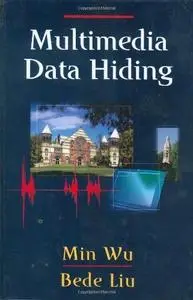
    Multimedia Data Hiding

    Posted By: AvaxGenius
    Multimedia Data Hiding

    Multimedia Data Hiding by Min Wu , Bede Liu
    English | PDF (True) | 2003 | 228 Pages | ISBN : 0387954260 | 21.7 MB

    The digital information revolution has brought about profound changes in our society and our life. New devices and powerful software have made it possible for consumers worldwide to create, manipulate, share, and enjoy the multimedia information. Internet and wireless networks offer ubiquitous channels to deliver and to exchange multimedia information for such pur­ poses as remote collaboration, distant learning, and entertainment. With all these advances in multimedia coding and communication technologies over the past decade, the major hurdle for allowing much broader access of multimedia assets and deployment of multimedia services no longer lies with bandwidth-related issues, but with how to make sure that content is used for its intended purpose by its intended recipients. The core issue then be­ comes the development of secure management of content usage and delivery across communication networks. Data hiding and digital watermarking are promising new technologies for multimedia information protection and rights management. Secondary data can be embedded imperceptibly in digital multimedia signals for a variety of applications, including ownership protection, authentication, access con­ trol, and annotation. Data hiding can also be used to send side information in multimedia communication for providing additional functionalities or for enhancing performance. The extraction of the embedded data mayor may not need knowledge of the original host media data. In addition to im­ perceptibility, robustness against moderate processing such as compression is also an important consideration.

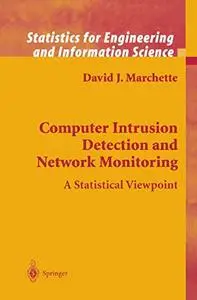
    Computer Intrusion Detection and Network Monitoring: A Statistical Viewpoint

    Posted By: AvaxGenius
    Computer Intrusion Detection and Network Monitoring: A Statistical Viewpoint

    Computer Intrusion Detection and Network Monitoring: A Statistical Viewpoint by David J. Marchette
    English | PDF | 2001 | 339 Pages | ISBN : 0387952810 | 29 MB

    In the fall of 1999, I was asked to teach a course on computer intrusion detection for the Department of Mathematical Sciences of The Johns Hopkins University. That course was the genesis of this book. I had been working in the field for several years at the Naval Surface Warfare Center, in Dahlgren, Virginia, under the auspices of the SHADOW program, with some funding by the Office of Naval Research. In designing the class, I was concerned both with giving an overview of the basic problems in computer security, and with providing information that was of interest to a department of mathematicians. Thus, the focus of the course was to be more on methods for modeling and detecting intrusions rather than one on how to secure one's computer against intrusions. The first task was to find a book from which to teach. I was familiar with several books on the subject, but they were all at either a high level, focusing more on the political and policy aspects of the problem, or were written for security analysts, with little to interest a mathematician. I wanted to cover material that would appeal to the faculty members of the department, some of whom ended up sitting in on the course, as well as providing some interesting problems for students. None of the books on the market at the time had an adequate discussion of mathematical issues related to intrusion detection.

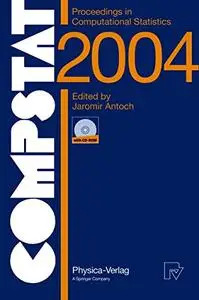
    COMPSTAT 2004 - Proceedings in Computational Statistics

    Posted By: AvaxGenius
    COMPSTAT 2004 - Proceedings in Computational Statistics

    COMPSTAT 2004 - Proceedings in Computational Statistics: 16th Symposium Held in Prague, Czech Republic, 2004 by Jaromir Antoch
    English | PDF | 2004 | 578 Pages | ISBN : 3790815543 | 67.3 MB

    Statistical computing provides the link between statistical theory and applied statistics. As at previous COMPSTAT volumes, the content of the book covers all aspects of this link, from the development and implementation of new statistical ideas to user experiences and software evaluation. The proceedings should appeal to anyone working in statistics and using computers, whether in universities, industrial companies, government agencies, research institutes or as software developers.

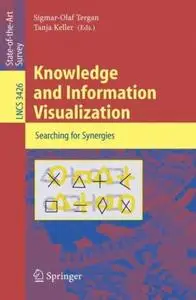
    Knowledge and Information Visualization: Searching for Synergies

    Posted By: AvaxGenius
    Knowledge and Information Visualization: Searching for Synergies

    Knowledge and Information Visualization: Searching for Synergies by Sigmar-Olaf Tergan, Tanja Keller
    English | PDF (True) | 2005 | 384 Pages | ISBN : 3540269215 | 10.9 MB

    Visualization has proven to be an effective strategy for supporting users in coping with complexity in knowledge- and information-rich scenarios. Up to now, however, information visualization and knowledge visualization have been distinct research areas, which have been developed independently of each other. This book aims toward bringing both approaches together and look- ing for synergies, which may be used for fostering learning, instruction, and problem solving. This introductory article seeks to provide a conceptual frame- work and a preview of the contributions of this volume. The most important concepts referred to in this book are defined and a conceptual rationale is pro- vided as to why visualization may be effective in fostering, processing and managing knowledge and information. The basic ideas underlying knowledge visualization and information visualization are outlined. The preview of each approach addresses its basic concept, as well as how it fits into the conceptual rationale of the book. The contributions are structured according to whether they belong to one of the following basic categories: "Background", "Knowl- edge Visualization", "Information Visualization", and "Synergies".

    Recommender Systems Handbook, Second Edition

    Posted By: AvaxGenius
    Recommender Systems Handbook, Second Edition

    Recommender Systems Handbook, Second Edition by Francesco Ricci, Lior Rokach, Bracha Shapira
    English | PDF (True) | 2015 | 1008 Pages | ISBN : 1489977805 | 13.4 MB

    This second edition of a well-received text, with 20 new chapters, presents a coherent and unified repository of recommender systems’ major concepts, theories, methodologies, trends, and challenges. A variety of real-world applications and detailed case studies are included. In addition to wholesale revision of the existing chapters, this edition includes new topics including: decision making and recommender systems, reciprocal recommender systems, recommender systems in social networks, mobile recommender systems, explanations for recommender systems, music recommender systems, cross-domain recommendations, privacy in recommender systems, and semantic-based recommender systems. This multi-disciplinary handbook involves world-wide experts from diverse fields such as artificial intelligence, human-computer interaction, information retrieval, data mining, mathematics, statistics, adaptive user interfaces, decision support systems, psychology, marketing, and consumer behavior. Theoreticians and practitioners from these fields will find this reference to be an invaluable source of ideas, methods and techniques for developing more efficient, cost-effective and accurate recommender systems.